Historic Seoul: Hanok Streets & Royal Palaces
Spend six hours exploring Seoul's historic heart, from Bukchon's traditional hanok streets to the stories behind its royal palaces.
I learned Seoul by walking it. Not by planning routes or chasing landmarks, but by wandering between them and noticing how the city changes every few blocks. One morning might begin at the stone gates of Gyeongbokgung Palace and end in a quiet hanok alley near Bukchon Hanok Village, where the noise of traffic fades into conversation and wooden doors. That slow shift between past and present is what makes walking tours in Seoul so compelling, especially in a city shaped by centuries of Korean history and culture.
Walking path along the historic Seoul City Wall under spring trees
Some cities reward speed. Seoul rewards curiosity. My favorite time for a long walk is early autumn when the air cools, and the city feels lighter under clear skies. Spring mornings come close, especially when palace courtyards and riverside paths begin to bloom. I have walked these routes for years and still return to them. Each one reveals a different side of the capital of Korea, from fortress ridges and forest trails to riverside promenades that stretch across the city center. Walk them slowly, and Seoul stops feeling enormous. It begins to feel connected, whether you explore independently, discover new Seoul experiences on foot, or join one of the many Seoul tours led by knowledgeable local guides. Most of the routes below work as self-guided walks; if you prefer a guide, the Jongno palace area is where local context adds the most value.
Seoul is one of the easiest major cities in Korea to explore on foot once you understand its rhythm. Districts connect naturally, and many of the best walking routes begin close to subway stations in the city center. I still prefer to start a walk without overplanning. The city tends to reveal its character one street at a time, whether you explore independently or join a small group walking tour led by local guides.
Before setting out on a walking tour in Seoul, a few practical details can make the experience far more comfortable. The city is very walkable, though its terrain and seasons can surprise first-time visitors. After years of exploring these neighborhoods on foot, I have learned that timing, weather, and simple preparation can shape how much you enjoy the experience.
Best months for walking: April to May and late September to October usually offer the most comfortable temperatures for exploring the city’s royal palaces, hanok villages, and riverside paths.
Summer conditions: June through August often bring heavy humidity and temperatures that can rise above 86°F (30°C), which makes long midday walks more difficult.
Winter conditions: December through February can drop close to 14°F (-10°C) on colder days, though winter skies often provide some of the clearest views across the capital of Korea.
Air quality: Occasional fine dust appears during spring. Checking a daily air-quality app before a longer route is a simple way to plan ahead.
Best time of day: Early morning and late afternoon feel calmer, especially near palace districts and along the Han River, where many walking tours begin.
Shoes: Comfortable walking shoes make a difference. Stone alleys, uneven paths, and historic neighborhoods can add more distance than you expect.
Navigation: Subway stations are frequent across central Seoul, making it easy to combine short train rides with longer walking routes through different districts.
If you like discovering Seoul at street level, these private experiences keep things flexible — from historic lanes to hillside trails and market walks — shaped around what you’re curious about.
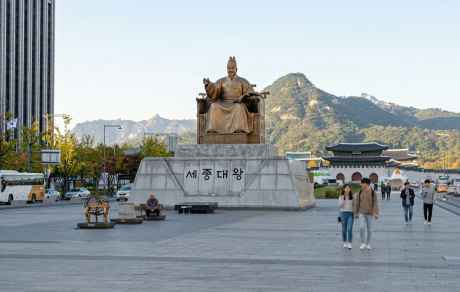
If someone asks me where to begin a walking tour in the capital, I always point them toward Jongno. This district holds the oldest layers of Seoul, and the streets connect naturally. One moment, you stand before the gates of Gyeongbokgung Palace, the largest of the city’s five grand palaces, including Changdeokgung and Deoksugung. A few minutes later, you move through the narrow lanes of Bukchon Hanok Village, where curved tile roofs stretch across the hillside.
Morning walkers along the Deoksugung Palace stone wall in Seoul
What I enjoy most about this route is how the atmosphere shifts block by block. Palace courtyards open wide beneath the mountains, then the streets narrow into quiet residential alleys. Wooden gates creak open. Tea houses sit above street level. Small galleries appear behind doors that many people pass without noticing. These streets reveal some of the capital’s quieter hidden gems in Seoul, shaped by centuries of Korean history during the Joseon Dynasty.
My favorite time to explore Jongno is early in the morning. The streets feel calmer, and the light moves softly across the stone walls of the palace grounds. From there, the route flows easily toward Insadong and the smaller lanes of Ikseon-dong, where the rhythm changes again as cafés begin to open. By the time the district fully wakes, you have already seen a side of the city that many travelers miss when rushing between the usual things to do in Seoul.
Sections of the Seoul City Wall still trace the hills that once protected the capital during the Joseon Dynasty.
One route I return to more than any other follows the old defensive ridge above the city. Sections of the Seoul City Wall still trace the hills that once protected the capital during the Joseon Dynasty, preserving part of the boundary that shaped the city for centuries. Exploring this path feels different from the streets below. Traffic noise fades, and the skyline slowly opens across the rooftops.
Seoul City Wall steps overlooking the city and N Seoul Tower
The stretch near Naksan Park is one of my favorite places to introduce people to this route. The path rises gradually beside the stone wall, and the views widen with every turn. Apartment towers, older neighborhoods, and modern construction cranes sit side by side across the horizon. From this height, the layout of the capital becomes easier to understand, revealing how centuries of Korean history and culture shaped the city.
I usually come here in the late afternoon when the light softens across the skyline. People pass at an easy pace. Some are local hikers finishing the day, others are travelers discovering the view for the first time. Follow the wall long enough, and the capital begins to feel smaller, as if the historic boundary still defines the city even now.
No set route, no group pace — just you and a Seoul host, walking the city the way you like. Start where it suits you, linger in palace lanes or hanok alleys, then pivot to wall views, forest trails, or the Han River as the day unfolds.
See private toursWhenever I need a break from the pace of the city, I head toward the forest paths of Namsan Park. The mountain rises right in the middle of Seoul, yet once you step onto the trails, the traffic noise fades quickly. Trees line the paths, and the air feels cooler as the route climbs gently through the hillside, offering one of the most peaceful ways to explore the capital on foot.
Walkers on the Namsan Park trail heading toward N Seoul Tower
I enjoy this route most in early autumn. The leaves begin to change, and the view opens across the rooftops of the city. The trails circle the mountain and lead naturally toward N Seoul Tower, where the skyline stretches across the horizon. From this height, you can see how dense the city is and how the river and surrounding mountains shape its layout.
What makes this place memorable is the balance between nature and city life. Local residents follow these trails every day, often stopping at viewpoints before continuing around the mountain. Travelers pass through quietly, taking in one of the most beautiful perspectives of the city. For a moment, the capital feels calmer, though the skyline never disappears. That contrast is what keeps bringing me back.
Some of my favorite routes in Seoul follow the water. The paths along the Han River stretch for miles across the city and offer a completely different atmosphere from the dense streets nearby. Instead of narrow alleys and traffic noise, you find open sky, long promenades, and wide views toward the skyline. It is one of the easiest ways for travelers to explore a calmer side of the capital while still staying close to its neighborhoods.
People walking and cycling along the Han River path near Banpo Bridge at sunset
I usually begin in the late afternoon near Banpo Bridge, where riverside parks attract local people finishing the day outdoors. As the sun begins to set, the river reflects the surrounding towers, and the pace of the city slows. Cyclists move along the dedicated paths, couples sit on the grass, and small groups gather along the riverbanks to watch the light change across the water.
This route feels less structured than many others in the capital. You can follow the river for twenty minutes or continue for hours in either direction, sometimes passing districts like Gangnam on the southern side of the river. After a long day exploring the city’s streets, these riverside paths show a slower version of Seoul, where the skyline feels distant, and the city finally has room to breathe.
Chat with someone who lives there and skip the guesswork.
Some well-known walking spots in Seoul attract large numbers of tourists but offer surprisingly little atmosphere once you arrive. Over time, I have learned that the best experiences often come from stepping slightly away from the busiest streets. A few blocks can reveal quieter routes, historic corners, and small hidden gems that many visitors overlook.
Popular Walking
Long queues and crowded viewpoints
Namsan forest trails, similar skyline views with peaceful walking paths through nature
Bukchon Hanok Village main photo streets
Heavy photography crowds and tour groups
Bukchon side alleys, traditional hanok architecture with quieter streets and everyday local life
Cheonggyecheon central stream section
Dense evening crowds and tourist congestion
Han River riverside paths, more open space, longer paths, and broader skyline views
Myeongdong shopping streets
Dominated by chain stores and busy tourist traffic
Jongno historic streets has a deep connections to Korean history and culture
Seoul Station traffic area
Busy roads with little pedestrian atmosphere
Seoullo 7017 Skygarden, elevated walkway designed for pedestrians with gardens and city views
| Popular Walking Spot | Why It Feels Overrated | Better Walking Route (Why It Works) | |
|---|---|---|---|
|
N Seoul Tower |
Popular Walking | Long queues and crowded viewpoints | Namsan forest trails, similar skyline views with peaceful walking paths through nature |
|
Bukchon Hanok Village |
Bukchon Hanok Village main photo streets | Heavy photography crowds and tour groups | Bukchon side alleys, traditional hanok architecture with quieter streets and everyday local life |
|
Cheonggyecheon |
Cheonggyecheon central stream section | Dense evening crowds and tourist congestion | Han River riverside paths, more open space, longer paths, and broader skyline views |
|
Myeongdong |
Myeongdong shopping streets | Dominated by chain stores and busy tourist traffic | Jongno historic streets has a deep connections to Korean history and culture |
|
Seoul Station |
Seoul Station traffic area | Busy roads with little pedestrian atmosphere | Seoullo 7017 Skygarden, elevated walkway designed for pedestrians with gardens and city views |
Exploring the city on foot is straightforward once you understand a few local details. These small adjustments can make a long walking route feel far more comfortable.
The subway system connects most major walking areas, making it easy to move between neighborhoods without backtracking.
Popular areas become busy once tour groups and tour guides begin arriving mid-morning.
Terrain changes quickly between districts, especially in historic neighborhoods and hillside parks.
Seasonal dust patterns occasionally affect air quality.
Andrew was great. He is very knowledgeable, and clearly proud of his culture. His sharing of that was our favorite part.John, Seoul, 2026
1) Are Seoul walking tours suitable for first-time visitors?
Yes. Walking tours help first-timers understand the layout of the city quickly, especially around historic areas like Jongno and the palace districts.
2) Are Seoul walking tours suitable for first-time visitors?
Yes. Walking tours help first-time visitors understand the layout of the city quickly, especially around historic districts such as Jongno and the royal palace area.
3) Do Seoul walking tours run in English?
Many tours offer English-speaking tour guides, particularly in central tourist districts and historic neighborhoods.
4) Are there free walking tours available?
Yes. Some Seoul free walking tours are led by volunteers and operate on a tip-based system, though many still require reservations in advance.
5) How large are walking tour groups?
Most tours keep the group size manageable so guides can share insights about Korean history and culture during the walk.
6) Can you explore the city on a self-guided walking tour?
Absolutely. Many travelers choose to explore Seoul independently, though joining a guided tour can offer a deeper historical context and local insights.
Seoul is a city best understood at street level. The royal palaces, hillside neighborhoods, quiet temple paths, and riverside parks reveal far more when you move through them slowly instead of rushing between attractions. Walking connects these places in a way that trains and taxis never quite manage.
Some of my favorite memories in the city come from simple walks. Early light touches the roofs of Bukchon Hanok Village before the crowds arrive. A steady climb through Namsan Park while the skyline wakes below. A quiet stretch along the Seoul City Wall, where centuries of Korean history stand beside modern towers.
Walker along the Seoul City Wall overlooking the city skyline
That rhythm is why walking tours remain one of the most rewarding ways to explore the capital. Choose a route, start early, and give the city time to unfold around you. Neighborhood by neighborhood, street by street, Seoul slowly reveals the character that makes it one of the most fascinating cities in Korea and one of the most memorable South Korean experiences you can have on foot.
Walk with a local host and follow your curiosity — from palace lanes to wall views and riverside paths, at your pace.
A fully private experience, planned and led by a local host who tailors the day to you
A personalized way to explore Seoul’s must-see landmarks beyond the tourist crowds.