Secret Montreal: Side Streets and Local Life
Explore Montreal through the smaller streets and independent storefronts of an area your host helps you choose.
By 9 PM on St-Laurent Boulevard, Montreal has already slipped into its nighttime rhythm. Office workers spill onto terraces, someone rides past with a guitar on their back, and a line is already forming at the bagel shop even though the sky has only just started to turn dark. That is the version of Montreal at night I trust most. It is not staged, it is not reserved for weekends, and it does not need a big event to feel alive.
I’m Camille, and I’ve lived in Montréal all my life. The best nights here rarely follow a strict plan. You might start with a drink in Old Montreal, head north for bars and live music in the Plateau, drift into the Village once the energy builds, and end up eating poutine or warm bagels after midnight because that is just how the city works after dark. This guide pulls together the Montreal experiences that actually make sense at night, with the neighborhoods, food, views, and nightlife that connect naturally once the evening gets going.
Montreal works best at night when you do not over-plan. If you are looking for things to do in Montreal after dark, pick one strong starting point, give the evening time to build, and leave enough room for the city to pull you somewhere better after dark.
Whether you’re leaning toward late-night food, neighborhood bars, or a more flexible city wander, these private experiences give you a simple way to keep the night personal and easy.
Montreal starts earning your attention before full dark. This is the part of the evening when terraces fill, downtown begins to glow, and one good first stop can shape the whole night in a way people usually underestimate.
Why go: If you want one strong start to the night, this is it. Mount Royal gives you the skyline, the river, and the kind of full-city view that makes the rest of your plan feel easier.
What to expect:
I bring people here when I want the night to begin with some perspective instead of noise, whether I am out with friends or showing the city to someone for the first time. You watch downtown light up, pick out the neighborhoods you might head to next, and suddenly Montreal feels less like separate districts and more like one city pulling you forward. For a first night, that matters. It gives the evening direction without making it feel overplanned.
Why go: Old Montreal works well as an opening scene. It gives you atmosphere fast, but I would not build the whole night around it.
What to expect:
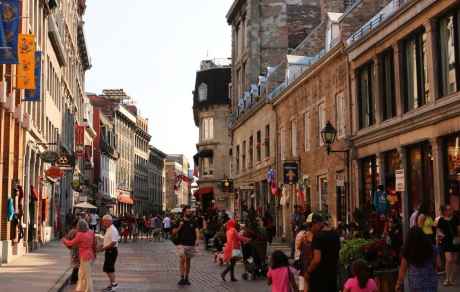
This is where I would start with someone who wants a beautiful first hour and has not seen the city before. The cobblestones, the terraces, and the soft evening light do a lot of work for you, but the trick is knowing when to leave. I like Old Montreal more as a first glass of wine or beer than as the main event, because the night usually gets better once you move north toward neighborhoods with stronger bars, better food, and more real momentum.
Why go: Start here when you want the city to do some of the work for you. Quartier des Spectacles gives you movement, events, and a natural downtown entry point without much effort.
What to expect:
I like this part of downtown most when the light is dropping and the first crowds are starting to settle in. A square that felt ordinary an hour earlier can suddenly fill with people standing still, looking in the same direction, because something has started and nobody wants to miss the first few minutes. That is why this area works so well on a first night. You do not need a perfect plan. You just need to arrive at the right time and let the city tip the evening in the right direction.
From tucked-away eateries to local favorites, discover the flavors worth your time.
Montreal is one of those cities where night food is part of the plan, not damage control at the end of it. After bars close or a long walk turns into real hunger, you still have places worth going to, which is a big part of why nights here stretch so easily past midnight.
Best for: A classic late-night stop that still feels worth it.
What to expect:
When I end up here late, it is usually because the night has already taken on a life of its own and nobody wants to go home just yet. It is exactly the kind of stop that makes sense long after you should already be in bed. That is when La Banquise makes the most sense. It is busy, loud, and a little chaotic in the way a real late-night place should be, and it still works because everyone is there for the same reason. You want something hot, fast, and unmistakably Montreal after midnight, and this is still the easiest answer.
Best for: A lighter late-night food stop that still feels like part of the night.
What to expect:
I have done the Fairmount versus St-Viateur comparison more times than I can count, and at night the argument matters less than people think. What matters is getting there while the neighborhood is still humming, ordering a warm bagel straight out of the oven, and eating it on the street while the night resets for a minute. Bagels are not just a daytime Montreal experience, and Mile End is one of the few places where a simple food stop can still feel like part of the city’s nightlife.
Best for: A downtown food stop when you want something more substantial than another round of drinks.
What to expect:
This is one area where I would tighten the article rather than oversell it. Dunn’s still makes sense when you want smoked meat downtown and need somewhere that stays open deep into the night. Chinatown is different. I would still send people there for noodles or dumplings earlier in the evening, especially if the night starts downtown, but I would not promise it as a guaranteed midnight fallback anymore. The better recommendation is to treat Chinatown as a strong late dinner option, then keep Dunn’s or Mile End in reserve if the night keeps going.
I still like this part of Montreal best when the night is just getting loose and nobody is pretending it has to be bigger than it is.
Montreal nightlife still does not follow one script, which is part of why the city works so well after dark. You can start with a pint in the Plateau, slide into a small St-Laurent room where the music actually matters, and end up in the Village or at an after-hours set without the night feeling forced.
Best for: Craft beer, low-pressure bars, and a first stop that can easily become the whole evening.
What to expect:
I still like this part of Montreal best when the night is just getting loose and nobody is pretending it has to be bigger than it is. Dieu du Ciel! works because it feels grounded, and once you are in the Plateau, it is easy to keep moving between bars without spending the whole night checking maps, chasing reservations, or paying downtown prices that do not improve the experience.
Best for: Indie nightlife, live music, dance nights, and keeping close to the city’s working music culture.
What to expect:
This stretch is where I go when I want the night to have some texture. The rooms are smaller, the crowds tend to care about what is actually on, and you are much more likely to catch local artists, a sharp DJ set, or a dance night that feels discovered rather than packaged.
Best for: Queer nightlife, bigger rooms, drag, and dancing that starts late and stays social.
What to expect:
The Village makes sense almost immediately once you are in it. The night gets louder, the sidewalks get more social, and the energy picks up in a way that feels easy to join even if your original plan was only one more drink. For visitors, it is one of the simplest places to find dancing without overthinking dress codes, table bookings, or whether the room will feel stiff.
Best for: House, techno, and the kind of after-hours experience that only works when you still have real energy left.
What to expect:
Stereo only makes sense when the rest of the night has already carried you there naturally. I would not sell it as a general nightlife pick for everyone, but for the right person, it is still one of the clearest ways to understand why Montreal’s after-hours reputation has held up for so long. By the time you are walking in at midnight, you should already know whether you want one more hour out or a completely different kind of night.
Whether you want late-night food, neighborhood bars, skyline views, or a looser evening that changes as you go, this private experience starts with what interests you most. A local host helps the night flow naturally, at your pace, without making it feel overplanned.
Plan your experienceMontreal feels bigger at night when downtown turns into a shared stage. In the warmer months especially, Quartier des Spectacles can take over the whole evening without much effort from you, because once one crowd gathers around a stage or outdoor set, it is easy to let the night keep moving from there. If you are planning ahead for 2027, check the official festival sites before you build a trip around exact dates, because Montreal’s biggest festivals keep a familiar seasonal rhythm but the calendar can shift year to year.
Downtown feels different during festival season because the night stops belonging to one venue and starts spilling across whole blocks. You can head there thinking you will watch one set, then end up staying because another crowd is forming a few minutes away and the whole area feels too awake to leave. In summer, that gives Montreal real scale and brings in artists from around the world. By late November and December, the mood changes, but the habit stays the same, with lights, installations, and seasonal events keeping downtown active after dark in a quieter way.
Not every Montreal night needs bars, music, or a packed terrace. Sometimes the better move is to slow the pace, get near the water, and let the city feel a little wider for an hour before heading home or deciding what comes next.
The Old Port works when I want the city to still feel awake around me, but without having to do much beyond walk. You get the river, the lights, and that slower after-dinner drift where people spread out and the streets stop feeling so compressed. The canal is different. That is where I go when I want the night to flatten out a little, clear my head, and feel less like I am following the city’s pace. That contrast is why both belong here. One keeps you close to the glow of Montreal at night, and the other lets you step just far enough away from it.
Montreal makes more sense at night when you think in Montreal neighborhoods instead of single venues. The right area can save time, keep the night moving, and help you choose between bars, live music, dancing, or a quieter evening without forcing too much into one plan.
The Plateau and Mile End are still where I would send most people first because they give you the widest range without making the night feel scattered. You can start with a beer at Dieu du Ciel!, catch a show at Casa or Sala Rossa, and end up with St-Viateur or Fairmount bagels without ever feeling like you have drifted too far from the center of things. When people ask me which neighborhood works best if they only have one night in Montreal, this is still the easiest answer. It has enough bars, enough food, and enough movement to carry almost any kind of evening.
Downtown works best when there is a festival, a bigger performance, or a clear event pulling people into the core. The Village is where I would go when the night needs more energy and you want dancing, drag, or a later finish. Saint-Henri and Little Burgundy suit a quieter night, when wine bars, a slower walk, and a calmer ending sound better than one more crowded room.
Chat with someone who lives there and skip the guesswork.
Montreal changes its night rhythm more than most cities do. The same downtown blocks, bars, and neighborhoods can feel open and loose in summer, then tighter, earlier, and more deliberate once winter sets in.
Summer nights: Summer is when Montreal feels easiest after dark. Terraces stay busy, festival crowds spill through downtown, and it is normal to let the evening stretch because there is usually something happening outside. This is the season when I leave more room in the plan, because one drink can turn into a walk, a stage, and then food after midnight without much effort.
Winter nights: Winter asks for a little more intention. People start earlier, move faster between stops, and use bars, clubs, and indoor venues as anchors instead of drifting as much between neighborhoods. It just changes the order of things. You warm up first, then decide which cold walk or outdoor event is worth it.
Montreal does not lose its nightlife in winter or flatten out in summer. It just changes the way a good night comes together. If you understand that early, you make better choices about where to start, how long to stay out, and what kind of night you are actually building.
Patrick Tanguay was our guide and my niece and I totally loved our day! Patrick is an history teacher and we have gotten way more than our money’s worth.Melanie, Montreal, 2025
Montreal usually rewards loose plans, but there are still a few easy mistakes that can leave the night feeling more expensive, more crowded, or less memorable than it should. These are the choices I would watch most closely if you want the evening to land well.
Montreal is easy to enjoy at night if you get a few basics right before you head out. The main things that matter are how you move between neighborhoods and what you know before the night starts stretching later than planned.
1) Do You Need a Car for Montreal at Night?
No. Montreal’s core night areas are easy to cover by metro early in the evening, and STM runs all-night bus service every night after the last trains.
2) How Late Does the Metro Run on Weekends?
It depends on the line and station, but many central stations run until around 1:20 AM to 1:30 AM on Saturdays, then night buses take over.
3) Is One Night in Montreal Enough to Get a Feel for the City?
Yes, if you keep it simple. One strong route through Mount Royal, Old Montreal, the Plateau, or the Village is usually better than trying to cram in the whole city.
4) Can You Go Out in Montreal if You Are 18?
Yes. In Quebec, you must be 18 to buy alcohol, which makes Montreal nightlife accessible earlier than in many U.S. cities.
Montreal at night works because the city makes spontaneity feel easy. You can start with a view from Mount Royal, drift into Old Montreal for a first drink, head north for bars and music in the Plateau, and still end up eating bagels or poutine after midnight without the night ever feeling forced. The neighborhoods connect well, the nightlife has range, and even a simple plan can turn into a much better evening once the city starts pulling you along.
If you are looking for things to do in Montreal at night, the best advice I can give is to leave a little space in the plan. Some of the strongest nights here come from one extra stop, one street that looks worth following, or one last food run you did not think you needed. Canadian experiences reward people who stay flexible. Montreal gives you enough structure to get around, enough energy to keep going, and enough character in each neighborhood to make the night feel like it belonged to the city, not just to your itinerary.
Start with the neighborhoods, food spots, views, or nightlife that interest you, then let a local host shape the evening around your pace. Private, flexible, and easy to make your own.
Talk through neighborhoods, nightlife, food stops, and the kind of evening you want before you book. You’ll get local advice shaped around your pace, interests, and how you actually want to spend your night.
A personalized way to explore Montreal’s must-see landmarks beyond the tourist crowds.