Benny our guide was amazing and very accommodating to our wishes during the market tour, we seen very exciting different and unique markets that locals go to everyday in Hong Kong and we really enjoyed our time on this tour.Lee-Anne, Hong Kong, 2026

Table Of Contents
- Hong Kong at a Glance
- Best Things to Do in Hong Kong: Top Experiences
- One Good First Day: Harbor, Height, and the City After Dark
- Where to Start: The Sights and Experiences That Set the Tone
- Neighborhoods That Show the City at Street Level
- What to Eat First: The Dishes That Tell You the Most
- Chi Lin Nunnery and Nan Lian Garden: Stillness, Order, and Room to Breathe
- Beyond the Skyline: Islands, Hills, and a Slower Day
- After Dark: Markets, Racing and the City at Full Volume
- What to Do Differently in Hong Kong: Quick Fixes That Change Your Trip
- Practical Tips for Things to Do in Hong Kong
- Frequently Asked Questions on Things to Do in Hong Kong
- Hong Kong Beyond the Checklist
I've lived here my entire life, and this guide is designed to help you decide where to go, what to prioritize, and which Hong Kong experiences are most worth your time. It focuses on how the city works day to day, not just what ends up on a checklist. Hong Kong rewards timing and sequence more than volume: the same district can feel rushed, flat, or exactly right depending on when you arrive and what you pair it with.

Star Ferry and skyline on Victoria Harbor
Hong Kong can feel overwhelming at first. Skyline views, temples, ferries, markets, islands, and hiking trails all compete for your attention. What shapes a good trip here is not trying to do everything. It is knowing which places are worth your time, when to visit them, and how different parts of the city change from morning to night.
Hong Kong at a Glance
If you want a quick orientation before planning your days, this is how Hong Kong works in practice.
Best for: Travelers who want skyline views, great food, dense neighborhoods, and a mix of urban energy and quieter escapes.
Ideal stay: 3 to 5 days gives you enough time for the harbor, one or two key neighborhoods, a slower half day, and at least one evening that is not rushed. If you are still deciding where to stay in Hong Kong, base yourself somewhere that makes day-to-day movement easy, not just somewhere that looks central on a map.
City pace: Fast, vertical, and crowded. Distances look short on a map, but hills, transfers, and foot traffic add time.
Budget range: Moderate to high. Public transport is affordable, but hotels, rooftop bars, and some major attractions add up quickly.
Walking factor: High. Even with the MTR, you will cover a lot of ground on foot through stations, walkways, markets, and uphill streets.
When it feels best: October to early December usually offers the clearest skies, lower humidity, and the most comfortable walking weather. Spring is manageable but often humid. Summer is intense.
Best Things to Do in Hong Kong: Top Experiences
If you want a quick starting point, these are the experiences that give you the clearest sense of Hong Kong:
- Ride the Peak Tram to Victoria Peak for skyline views and a short walk above the city.
- Take the Star Ferry between Central and Tsim Sha Tsui for a simple harbor crossing that still feels worth doing.
- Eat dim sum in Sheung Wan, where meals stretch longer and feel less rushed.
- Visit Temple Street Night Market later in the evening when the atmosphere settles.
- Spend time at Chi Lin Nunnery (志蓮淨苑) and Nan Lian Garden when you need a slower pace.
- Choose either Lantau Island or Dragon’s Back if you want to step beyond the city’s density.
One Good First Day: Harbor, Height, and the City After Dark
If you only have one full day, keep it simple. This route gives you the skyline, the harbor, one strong neighborhood stretch, and an evening with more character than polish.
Morning: Start Above the City
- Take the Peak Tram up to Victoria Peak early, before the crowds build
- Walk beyond the main terrace to Lugard Road for wider, quieter views
- Come back down into Central rather than lingering too long at the top
Afternoon: Move Through the City Properly
Spend the middle of the day in Central, then continue into Sheung Wan if you want older streets and a slower lunch. This gives the day a better rhythm than rushing between major sights.
Late Afternoon: Cross the Harbor
Take the Star Ferry to Tsim Sha Tsui rather than the MTR. The crossing keeps the skyline in view and makes the shift into Kowloon feel like part of the day rather than a transfer.
Evening: Choose the Right Kind of Energy
- Stay on the Tsim Sha Tsui promenade for the skyline at dusk
- Or head later to Temple Street if you want food, noise, and a more rough-edged evening
- This works because it keeps the day in a natural sequence: height in the morning, street level in the afternoon, harbor at dusk, and the city after dark.
Choose The Side Of Hong Kong You Want To Explore Most
This article is about prioritizing well. Browse private experiences built around skyline views, slower neighborhoods, Lantau, and Kowloon after dark.
Where to Start: The Sights and Experiences That Set the Tone
Start with the places that make the city click: the harbor, the skyline, the climb uphill, and the districts that show how daily life moves. These are the stops that give a first trip its shape.
Victoria Peak: The View That Explains the City
Why go: The clearest place to understand the city’s shape, with skyline views across Victoria Harbor and out toward the islands.
What to see:
- The Peak Tram from Central
- The main viewing terrace
- Lugard Road for wider, quieter views
- The circular walk around the Peak
Best time: Before 9 AM for clearer views and fewer crowds, or after 7 PM once the skyline lights up.

Peak Tram above Hong Kong’s skyline
Victoria Peak is one of the few places that helps the whole city make sense at a glance. The Peak Tram still feels like part of the experience, but the visit improves once you move beyond the main terrace. Lugard Road opens the view properly and gives the morning or evening a little more breathing room.
Midday is the weakest time to come. Haze is more common, tour groups build quickly, and the top can feel more crowded than impressive. Early mornings are calmer and clearer. Evenings bring more people, but the skyline carries a greater presence once the light drops.
Central: Walkways, Escalators, and the City in Motion
Central is one of the quickest ways to understand how the city works day to day. The elevated walkways can feel disorienting at first, then suddenly they make sense. Offices, malls, stations, footbridges, and side streets all connect in a way that feels efficient without ever seeming simple.

Covered escalator walkway in Central Hong Kong
The Mid-Levels Escalator is part of that rhythm. Come around lunchtime or in the early evening, and the district reveals itself properly: office workers move quickly through the covered walkways, then, a few minutes uphill, the pace loosens into quieter residential streets and bars setting up for the night. That shift is what makes Central more interesting than its skyline-facing image suggests.
Tsim Sha Tsui Promenade: The Skyline at Its Most Open
Best time: Early evening, when the light starts to shift, and the waterfront still has room to pause.
This is one of the few obvious stops that still earns its place. The harbor does most of the work, but what gives this stretch its value is space. In a city that often feels compressed, the promenade gives you room to stop, look across the water, and let the view settle properly.

Tsim Sha Tsui waterfront facing Hong Kong’s skyline
The best approach is often the Star Ferry. Crossing from Central into Tsim Sha Tsui keeps the harbor in motion a little longer and makes the promenade feel like a continuation rather than a separate stop. If you are already here, the Hong Kong Space Museum is an easy add-on, but I would not build the stop around Symphony of Lights. The real draw is the skyline itself, especially in the stretch when the buildings begin to glow, and the Kowloon side starts to slow into the evening.
Theme Parks: Better on Longer Trips or With Children
Why go: A good extra for families, longer stays, or trips that have room for one bigger attraction day.
What to see:
- Hong Kong Disneyland for an easier, smaller-scale park day
- Ocean Park for rides, sea views, and a stronger city character

Ocean Park aquarium building in Hong Kong
This is not where most first-time trips should begin. If time is limited, the harbor, neighborhoods, and day-to-day texture of the city will tell you more. If you are traveling with children or simply looking for fun things to do in Hong Kong, the theme parks do have a place. Hong Kong Disneyland is easier to manage and works well with children, while Ocean Park has a better setting and feels more tied to the city around it.
If you only have time for one, Ocean Park is the stronger fit for this guide. The sea views help, but Ocean Park also has a stronger sense of place.
It is worth slowing down here.
Neighborhoods That Show the City at Street Level
Once the skyline has done its work, the city starts to make more sense on the ground. These are the neighborhoods worth prioritizing for older streets, daily routine, and the kind of detail that tells you more than any landmark can.
Sheung Wan and Wan Chai: Older Streets, Dim Sum and the City at an Easier Pace
Why go: One of the best parts of Hong Kong Island for older streets, slower meals, and the everyday detail that gives the city its depth.
What to see:
- Dried seafood streets and older tong lau buildings in Sheung Wan
- A traditional dim sum restaurant where the meal still feels unhurried
- Side streets in Wan Chai that shift noticeably from morning to evening
- Hong Kong Park for a quieter pause nearby
Best for: Slower afternoons, dim sum, older streets, and a part of the island that still feels layered.

Dried seafood shopfront in Sheung Wan
Sheung Wan is one of the easiest places to feel the city settling into itself. The dried seafood shops, narrow pavements, and tea restaurants that never seem in a hurry give the area a steadier rhythm than much of the island. It is worth slowing down here. The appeal is not one single sight, but the way older shopfronts, lunch habits, and daily routine still hold their ground.
Wan Chai is less settled, which is part of what makes it interesting. Some streets feel polished, others still feel slightly worn-in, and the shift from one to the other can happen within a few minutes. I tend to prefer the quieter stretches, where the pace drops and the district feels less performative. Hong Kong Park fits naturally into that pattern. It is not a headline stop, but it is one of the easiest places to step out of the noise for half an hour and reset the day.
Sham Shui Po: Street Markets, Everyday Food, and a More Grounded Side of the City
Why go: One of the clearest places to experience the city beyond the skyline, with street markets, old apartment blocks, practical shopping, and food tied closely to daily life.
What to see:
- Electronics stalls and repair shops around Apliu Street
- Fabric shops and tailoring supplies near Cheung Sha Wan Road
- Street food stalls around Pei Ho Street
- A cha chaan teng for milk tea, pineapple buns, or a quick breakfast
Best for: Street markets, everyday food, practical shopping, and a more grounded side of the city.

Bustling street market on Tung Choi Street in Sham Shui Po, Hong Kong
Sham Shui Po shows the city in a more practical mood. It is dense, worn-in, and busy in a way that feels earned. Things are repaired here, chosen carefully, eaten quickly, and carried home without much fuss. That is what makes the area valuable. It still feels shaped by routine rather than presentation.
The best way to be here is to move slowly and pay attention to what people are doing, not just what is on display. Apliu Street, the fabric shops, and the food stalls all make more sense when seen as part of the same daily pattern. Curry fish balls, cart noodles, and a cha chaan teng breakfast belong to that rhythm. They do not feel staged for visitors. They feel like the city is getting on with itself.
Mong Kok and Ladies Market: Crowds, Street Markets and the City at Full Volume
Why go: One of the clearest places to feel the city at its most crowded, commercial, and overstimulating.
What to see:
- Ladies Market on Tung Choi Street
- The surrounding market streets and side lanes of Mong Kok
- Bargaining stalls selling clothing, accessories, souvenirs, and small goods
- The constant foot traffic that gives the area its force

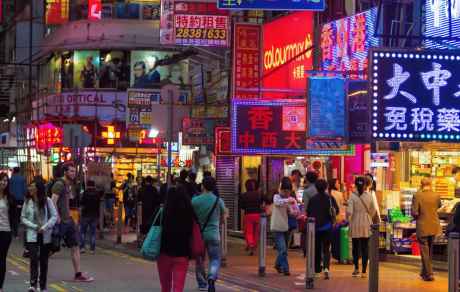
Crowded market street in Mong Kok, Hong Kong
Mong Kok earns its place because the density is the experience. Streets feel full almost from the moment you arrive, and the pace can tip from lively to exhausting if you stay too long or come at the wrong time. That pressure is part of the character. For an hour or two, it can be one of the clearest ways to understand the city at full stretch.
Ladies Market is more useful as an atmosphere stop than a shopping one, and it remains one of the more obvious things to do in Mong Kok if you want to feel the district at full volume. I would not come expecting the best buys, and I would not build half a day around it. What it gives you is volume: crowds, noise, movement, and the sense of a district always on the verge of spilling over. It works best in small doses.
What to Eat in Hong Kong at Night
Not sure what to order or where to go after dark? This local-led experience helps you try the right dishes, understand menus, and avoid the usual tourist spots.
See the Hong Kong night food experienceWhat to Eat First: The Dishes That Tell You the Most
Food is one of the quickest ways to understand the city properly. Not every meal needs planning, but a few dishes and formats are worth seeking out early because they say more about daily life here than a longer list of attractions ever could. If you want a fuller guide to the best places to eat in Hong Kong, that deserves its own plan.
Cha Chaan Teng Staples: Milk Tea, Pineapple Buns, and Egg Tarts
If there is one food format that says the most about daily life here, it is the cha chaan teng. These cafés are fast, practical, and woven into the city’s routine. A glass of Hong Kong-style milk tea, a warm pineapple bun, or an egg tart will tell you more about how people eat between errands, before work, or in the middle of an ordinary afternoon than a more polished meal ever could.

Hong Kong pineapple bun on a small plate in a traditional cha chaan teng
This is not food to overthink. The appeal is partly in how unceremonious it feels. You sit down, order quickly, and let the rhythm of the place do the rest. For a first-time visitor, it is one of the easiest ways to get closer to the city’s everyday texture without turning the meal into an event.
Street Food That Still Feels Like the City: Fish Balls, Siu Mai, and Egg Waffles
The city still makes sense through its street food, especially when you stop looking for a perfect version of everything and pay attention to what people are buying on the move. Curry fish balls, siu mai, and egg waffles remain some of the easiest things to try, not because they are elaborate, but because they are immediate, familiar, and tied to the pace of the streets around them.

Hong Kong pineapple bun on a small plate in a traditional cha chaan teng
Sham Shui Po is one of the better places to understand that rhythm. Food here feels connected to errands, school runs, market streets, and quick stops between other parts of the day. That matters more than chasing a checklist of snacks. Street food is at its best when it still feels part of the neighborhood rather than something staged for visitors.
Late-Night and Waterfront Meals: Claypot Rice and Seafood
Some foods make more sense once the day slows down. Claypot rice is one of them. It suits the later rhythm of Temple Street, when the market settles, the air feels heavier, and dinner stops becoming something quick and starts turning into part of the night itself. It is one of the meals that still gives the city a little roughness after dark, which is part of why it stays memorable.

Seafood dishes shared at a relaxed waterfront dinner
Seafood belongs to a different mood altogether. On the islands or along the waterfront, the pace loosens, and the meal stretches longer. That contrast is part of what makes it worthwhile. One side of the city eats on the move. The other sits a little longer over seafood by the water. Both belong here, and together they give you a better sense of the city than a single “must-try” list ever could.
Avoid Overplanning Your First Day
Keep your first day light. Jet lag and navigation take more time than expected, so plan one area only and leave space to adjust once you’re there.Chi Lin Nunnery and Nan Lian Garden: Stillness, Order, and Room to Breathe
When the city starts to feel too compressed, this is one of the easiest places to reset. The calm here feels complete, not decorative, which is part of why it stays with people.
Why go: One of the easiest places to step out of the city’s pace, with temple architecture, ordered gardens, and a calm that feels unusually complete.
What to see:
- The wooden halls of Chi Lin Nunnery
- Lotus ponds and stone bridges throughout Nan Lian Garden
- Tang-style architecture and carefully placed rock features
- The vegetarian restaurant overlooking the garden
Pace: Slow, quiet, and restorative.

Pavilion and garden at Nan Lian Garden on a bright day
Chi Lin Nunnery and Nan Lian Garden are among the few places where the city seems content to hold still. Nothing here feels accidental. The timber halls, lotus ponds, stone bridges, and measured spacing all encourage a slower pace, and that sense of order is part of what makes the visit so settling.
At first, the garden can seem almost too composed. Then it begins to work on you. In a city that so often pushes forward, this is one of the rare places that feels comfortable being still. It is worth lingering here a little longer than planned.
recommended by 99% of travelers on google
recommended by 99% of travelers on tripadvisor
Beyond the Skyline: Islands, Hills, and a Slower Day
The city is only part of the picture. If you are deciding which day trips from Hong Kong are worth your time, these are the places to turn to for more space, a slower rhythm, and a clearer sense of how much lies beyond the harbor and high-rises.
Lantau Island: Mountains, Monasteries and a Wider Sense of the City
Lantau is where the city loosens its grip. Within an hour, the pace changes, the air feels different, and the day begins to open out. It is one of the few parts of the territory that rewards a lighter plan and a little more patience.
Ngong Ping and the Big Buddha
Why go: A strong contrast to the city, with mountain views, one of the most recognizable landmarks, and a quieter, more reflective mood.
What to see:
- The Ngong Ping cable car over Tung Chung Bay and the hills
- Tian Tan Buddha and the steps leading up to it
- Po Lin Monastery (寶蓮禪寺) and its vegetarian meal hall
Best time: Earlier in the day, before the main tour groups arrive.

Ngong Ping 360 cable cars crossing the hills on Lantau Island
The cable car is touristy, but it earns its place because the shift in scale is immediate. Towers and roads fall away, and the landscape begins to feel much larger than the city below suggests. Ngong Ping can be busy once you arrive, but the Buddha and monastery still have enough presence to slow the visit down if you let them.
Po Lin Monastery is what gives the stop more weight. A simple meal in the dining hall often stays with people longer than the viewpoints do. It brings the visit back to ground level and keeps the experience from becoming only a photo stop.
Tai O Fishing Village
Why go: A quieter coastal village with stilt houses, dried seafood shops, and a more weathered side of the territory.
What to see:
- Stilt houses built over the water
- Narrow lanes lined with dried seafood shops
- Small waterfront stretches where daily life still feels visible
Atmosphere: Slow, slightly worn-in, and shaped more by routine than by visitors.

Canal and stilt-side waterfront in Tai O
Tai O is the part of Lantau that lingers. It feels less arranged, more salt-marked, and more rooted in daily habit than most places visitors are told to prioritize. The draw is not a spectacle. It is the sight of ordinary life carrying on beside the water, with very little effort made to tidy it into something neater than it is.
That is what gives Tai O its value. The village matters more than any promise of dolphin sightings or day-trip novelty. It is one of the few places where the day seems to loosen and stop performing for a while.
Outer Islands: Ferries, Seafood, and a Change of Pace
Why go: An easy way to step out of the city’s density for half a day or more, with ferry rides, seafood lunches, village streets, and a noticeably slower pace.
What to see:
- Cheung Chau’s car-free lanes and seafood restaurants
- Lamma Island’s village-to-village coastal walk
- Beaches, waterfront paths, and ferry views back toward the harbor
Ideal stay: Half a day to a full day, depending on whether you want a long lunch or a longer walk.

Waterfront street life on Cheung Chau
The outer islands are where the day begins to stretch. Cheung Chau is the easiest to settle into, especially if the plan is a seafood lunch followed by an unhurried walk. It still feels shaped by daily life, which keeps it from slipping into the sort of charm that can feel over-arranged.
Lamma is better when the day needs a little movement. The walk between villages gives it structure, while the sea views and simple restaurants keep the pace light. Neither island demands much planning, which is part of the appeal.
Dragon’s Back: An Easy Hike with a Strong Payoff
Why go: One of the most accessible hikes in the territory, with open ridge views, a manageable trail, and a high return for relatively little effort.
What to see:
- The ridgeline trail along Shek O Peak
- Views over Big Wave Bay, Shek O, and the southeast coast
- The descent toward Big Wave Bay at the end of the walk
Walking factor: Moderate. The trail is well-marked and does not require technical gear, but proper walking shoes help.

Two hikers pausing at a viewpoint on Dragon’s Back
Dragon’s Back is the hike I suggest when people want open space without turning the day into an expedition. It gives you sea air, a clear ridgeline, and that sudden feeling of the territory opening out, but it does not ask for much beyond a free morning and decent fitness.
What makes it such a good choice is how quickly it rewards you. The views come early, the route is easy to follow, and the whole thing feels achievable even if hiking is not normally part of the trip. On a clear morning, it is one of the simplest ways to see beyond the city blocks.
Plan Smarter, Travel Better
Chat with someone who lives there and skip the guesswork.
After Dark: Markets, Racing and the City at Full Volume
If you want to understand Hong Kong at night, start here. The city does not soften after dark. It sharpens. These are the places to turn to when you want noise, movement, and the kind of evening atmosphere that feels most true to its character.
Temple Street Night Market: Street Food, Noise, and a Better Late-Night Mood
Why go: One of the easiest places to step into the city after dark, with street food, noise, and an atmosphere that improves later in the evening.
What to see:
- The main market stretch after 9 PM
- Claypot rice stalls and late-night noodle shops
- Fortune tellers and side streets just off the busiest strip
- Tin Hau Temple, Yau Ma Tei (油麻地天后古廟), near the center of the market
Atmosphere: Busy, noisy, slightly theatrical, and far better once the early evening rush starts to thin.

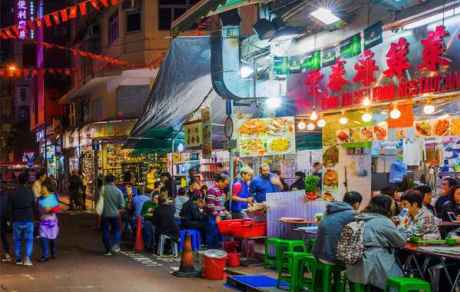
Lantern-lit market lane on Temple Street at night
Temple Street still earns its place, but not as a shopping stop. The main strip can feel too crowded and too self-conscious if you arrive too early, which is why timing matters more here than most people expect. Come later, let the first rush pass, and the market begins to settle into a better rhythm.
Food is the reason to stay. Claypot rice, noodle shops, and the side streets do more for the evening than the souvenir stalls ever will. This is one of the few places where the city still feels a little rougher, louder, and less polished at night, which is exactly why it works.
Happy Valley Racecourse: Midweek Racing Under the Towers
Why go: One of the city’s most distinctive evening experiences, where racing, betting, and crowd energy come together in a setting that could only belong here.
What to see:
- The racecourse is ringed by residential towers
- Wednesday night races
- The betting counters and grandstand atmosphere
- The final stretch, when the whole crowd lifts at once
Atmosphere: Loud, social, and more serious than first-time visitors often expect.

Night racing at Happy Valley Racecourse beneath the city towers
Happy Valley works because it feels old-fashioned and entirely at home in the middle of the city at the same time. The track is dramatic enough, but the crowd is what gives the place its force. People study the form, argue over horses, queue at the counters, then fall almost silent just before the finish.
It would not be on every first itinerary, but on the right trip, it earns its place. Few evening experiences feel as specific to the city, and fewer still show so clearly how leisure, ritual, and spectacle can sit side by side.
What to Do Differently in Hong Kong: Quick Fixes That Change Your Trip
Some of the most common Hong Kong experiences work, but only if you adjust how and when you do them. These small shifts make a noticeable difference to how the city feels.
What to Rethink and What to Do Instead
Victoria Peak
Instead of this
Victoria Peak at noon with crowds and haze
Do this...
Go early morning or after 7 PM for clearer views
Why it works better
Better visibility and fewer tour groups
Temple Street
Instead of this
Temple Street at 7 PM rush hour crowds
Do this...
Arrive after 9 PM when the pace slows down
Why it works better
Food improves, and the atmosphere feels more natural
dim sum spots
Instead of this
Famous dim sum spots on weekends
Do this...
Go on weekday mornings in Sheung Wan
Why it works better
Less waiting and a more relaxed meal
Ladies Market
Instead of this
Ladies Market during peak weekend hours
Do this...
Visit weekday mornings or go to Sham Shui Po
Why it works better
Easier browsing and better local feel
Overwhelmed
Instead of this
Trying to see everything in one trip
Do this...
Spend longer in one neighborhood
Why it works better
The city makes more sense at a slower pace
| Instead of this | Do this... | Why it works better | |
|---|---|---|---|
|
|
Victoria Peak at noon with crowds and haze | Go early morning or after 7 PM for clearer views | Better visibility and fewer tour groups |
|
|
Temple Street at 7 PM rush hour crowds | Arrive after 9 PM when the pace slows down | Food improves, and the atmosphere feels more natural |
|
|
Famous dim sum spots on weekends | Go on weekday mornings in Sheung Wan | Less waiting and a more relaxed meal |
|
|
Ladies Market during peak weekend hours | Visit weekday mornings or go to Sham Shui Po | Easier browsing and better local feel |
|
|
Trying to see everything in one trip | Spend longer in one neighborhood | The city makes more sense at a slower pace |
Practical Tips for Things to Do in Hong Kong
Hong Kong is easy to move through once you understand its rhythm, but small details make a noticeable difference. These are the things that help your days flow better and keep you from wasting time or energy.
Public Transport: How to Move Around Without Friction
- The MTR is the fastest way to get around and connects most areas you will visit
- Get an Octopus card immediately. It works across trains, buses, ferries, and small purchases
- The Star Ferry is both practical and worth doing for the harbor views
- Stations are large, and exits are not always close. Add walking time to your plans
- Buses and trams are useful for shorter distances and give you a better sense of the city

Commuters ride an escalator and walk along a Hong Kong MTR station platform
How the City Moves: Pace, Crowds and Daily Flow
- The city moves quickly. Stand on the right, walk on the left on escalators
- Weekday mornings are the easiest time to explore popular areas
- Weekends and public holidays bring heavier crowds across most districts
- Restaurants are efficient. Meals tend to move quickly unless you choose slower places
- Plan your day in clusters rather than crossing the city multiple times
Weather and Timing: When to Plan Outdoor Activities
- October to early December is usually the most comfortable, with clearer skies and lower humidity
- Summer is hot, humid, and often interrupted by heavy rain or typhoons
- Spring can feel overcast and sticky, especially in the afternoons
- Winter is cooler than expected, particularly in the evenings, but generally dry
- Start outdoor plans earlier in the day to avoid heat, haze, and heavier crowds
Frequently Asked Questions on Things to Do in Hong Kong
1) What is the best area to stay in Hong Kong for sightseeing?
Central and Tsim Sha Tsui are the most convenient for a first trip, with strong transport links and easy access to major sights. Sheung Wan is a good alternative if you want something slightly quieter while staying close to the center.
2) How many days do you need to explore Hong Kong properly?
Three to five days is enough to see the main highlights, explore a few neighborhoods, and leave room for one slower half day. Longer stays make it easier to add islands, hikes, or a more relaxed pace.
3) Can you visit Hong Kong’s nature spots without hiking experience?
Yes. Places like Lantau Island are easy to visit without hiking, and Dragon’s Back is manageable for most people with basic fitness and proper shoes.
4) What should you prioritize on a short trip to Hong Kong?
Focus on one or two major viewpoints, one or two neighborhoods, and one evening experience. The city works better when you choose carefully rather than trying to cover everything.
5) Is Hong Kong better explored by area or by attraction?
By area. The city usually makes more sense when you do one district properly and let the day build naturally, rather than crossing back and forth for individual sights.
Hong Kong Beyond the Checklist
Hong Kong is not a city that tries to soften itself for visitors. It is fast, crowded, layered, and sometimes exhausting. But that is also what makes it memorable. Once you stop trying to conquer it and start paying attention to how it moves, the city begins to open up.

Layered view over Hong Kong and Victoria Harbor at the end of the day
What I have learned from living here is that Hong Kong rewards attention more than ambition. You do not need to do everything. Some of what people call hidden gems in Hong Kong are not hidden at all. They just ask for a little more attention. You need to notice when to slow down, when to stay longer, and when to step away from the obvious choice. The best parts of the city rarely introduce themselves loudly. They appear in the spaces between plans, in the shift from day to night, in the feeling that there is always another layer just beyond the one you have already seen. That is what Hong Kong is worth returning for.

Ready to Plan Your Perfect Day in Hong Kong?
Start your experiencePlan Hong Kong Around What Matters Most
Prioritize Victoria Peak, Kowloon nights, Sheung Wan, or Lantau your way with a private experience shaped around your interests.s.
Wish You Could Just Ask a Local?
Book a quick call and get insider answers to your trip questions.
Meet Your Hong Kong Hosts
A personalized way to explore Hong Kong’s must-see landmarks beyond the tourist crowds.